
Board & company secretarial software
Decided in the room.
Kept on the record.
Notice, pack, quorum, the interests declared, the vote and the signed minute — each entered as it happens, and held under a records schedule that will not destroy what sits under legal hold.
Built around the company law and codes African boards work under, King IV among them, for boards in Nairobi, Lagos, Kampala and Johannesburg — where the company secretary, not the software, answers for the record.
01 Aug
Notice of meeting issued
To eight directors, fourteen days ahead.
08 Aug
Board pack circulated
Forty-two pages, with the auditor’s engagement letter.
15 Aug 10:04
Quorum established
Eight of eight present.
10:31
Interest declared
Grace Achieng declared an interest in item 7.3 and recused herself.
10:36
RES-2026-014 carried
Appointment of the external auditor for the year ending 31 December 2026. Moved by Wanjiru Kamau, seconded by David Otieno.
- For
- 6
- Against
- 0
- Abstained
- 1
22 Aug
Minutes signed by the Chair
Entered at minute 7.3.
Filed
Held under the records schedule
Board minutes, kept permanently. Nothing is destroyed while a legal hold applies.
An illustrative meeting, not a client’s.
- clear days’ notice by default, and you can set your own
- 7
- roles, from owner to outside adviser
- 8
- stages from draft minutes to the archive
- 4
- levels of confidentiality for an agenda item
- 3
Order of business
Software described in the order a meeting actually happens.
Every governance product lists the same features. What matters is whether they hold at the moment they are relied on: when a director with an interest is in the room, when a resolution is put, and when a retention schedule proposes destroying something a court has asked you to keep.
- 1.
Notice, quorum and conflicts
Papers out with the notice period the articles require. Quorum counted against the constitution rather than against who turned up. Declared interests attach to the item, so a director who must recuse is recused before the vote, not after somebody notices.
Notice · Quorum · Conflicts
- 2.
Minutes of the previous meeting
Last meeting’s minutes, the matters arising, and who owns them. Actions carry a name and a date and stay on the agenda until they are closed, which is the difference between a minute book and a filing cabinet.
Minute book · Matters arising
- 3.
The board pack
One pack, one version. Annotations are the director’s own and stay that way. Access ends when the directorship does — a director who has resigned can no longer open the strategy paper from a personal iPad.
One version · Private annotations
- 4.
Resolutions
Moved, seconded, put. The vote is recorded as cast, the recusals are recorded against it, and the resolution takes a number that is never reissued. Written resolutions between meetings are numbered in the same series.
RES-YYYY-NNN
- 5.
Compliance and returns
Filing deadlines, statutory registers and the returns each jurisdiction expects, against the calendar rather than against memory. When an obligation changes, the item changes with it.
Company law · King IV
- 6.
Records and disposition
A retention schedule that proposes disposal when a record is out of time, and refuses it while the record is under legal hold — checked again at the moment of execution, not only when the disposal was proposed.
Retention · Legal hold
Who sees what
Eight roles. Each sees what its role allows.
You choose the role when you appoint someone. The rules are kept by the database itself, so a restricted person cannot reach a paper by any route: not by a link, a search or the programming interface. Your auditor and your adviser do not need the board’s access to do their work.
The board
Owner
Created the organisation. Everything an administrator can do, and the only one who can change or remove an administrator.
Administrator
Runs the organisation on Board.Africa: appoints people, manages settings, meetings, papers and decisions.
Company secretary
Keeps the board’s records. Runs meetings, papers and minutes when the organisation lets the secretary manage board business.
Director
Sits on the board: reads its meetings and papers, votes and signs resolutions.
Around the board
Observer
Attends and reads the board’s open business. Does not vote, and never sees confidential or in-camera items.
Auditor
Reads approved minutes, decided resolutions, the registers and compliance records. Nothing in draft, nothing confidential.
Executive (management)
Presents to the board: sees only the agenda items they present, and files their papers for them.
Adviser
An outside adviser: sees only the papers shared with them, until their appointment ends.
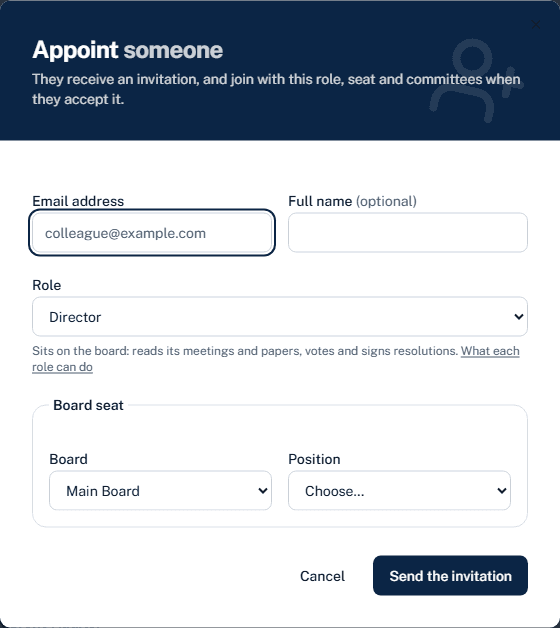
Appointed in one step
One invitation carries the role, the board seat and the committees. The person joins with all three when they accept.
Committee walls
A committee’s papers and minutes stay with its members unless your organisation opens them to the whole board.
Confidential and in camera
Mark an agenda item confidential or in camera, exclude a conflicted director, and its papers follow the item.
Access that ends
An adviser’s appointment ends on the date you set. After it, they can no longer open anything that was shared with them.
The chair’s powers
The chair approves the minutes and opens and closes votes without being an administrator, and committee chairs do the same for their own committees.
Two-step sign-in
An authenticator app on top of the password, with recovery codes, enforced by the database for everyone who has turned it on.
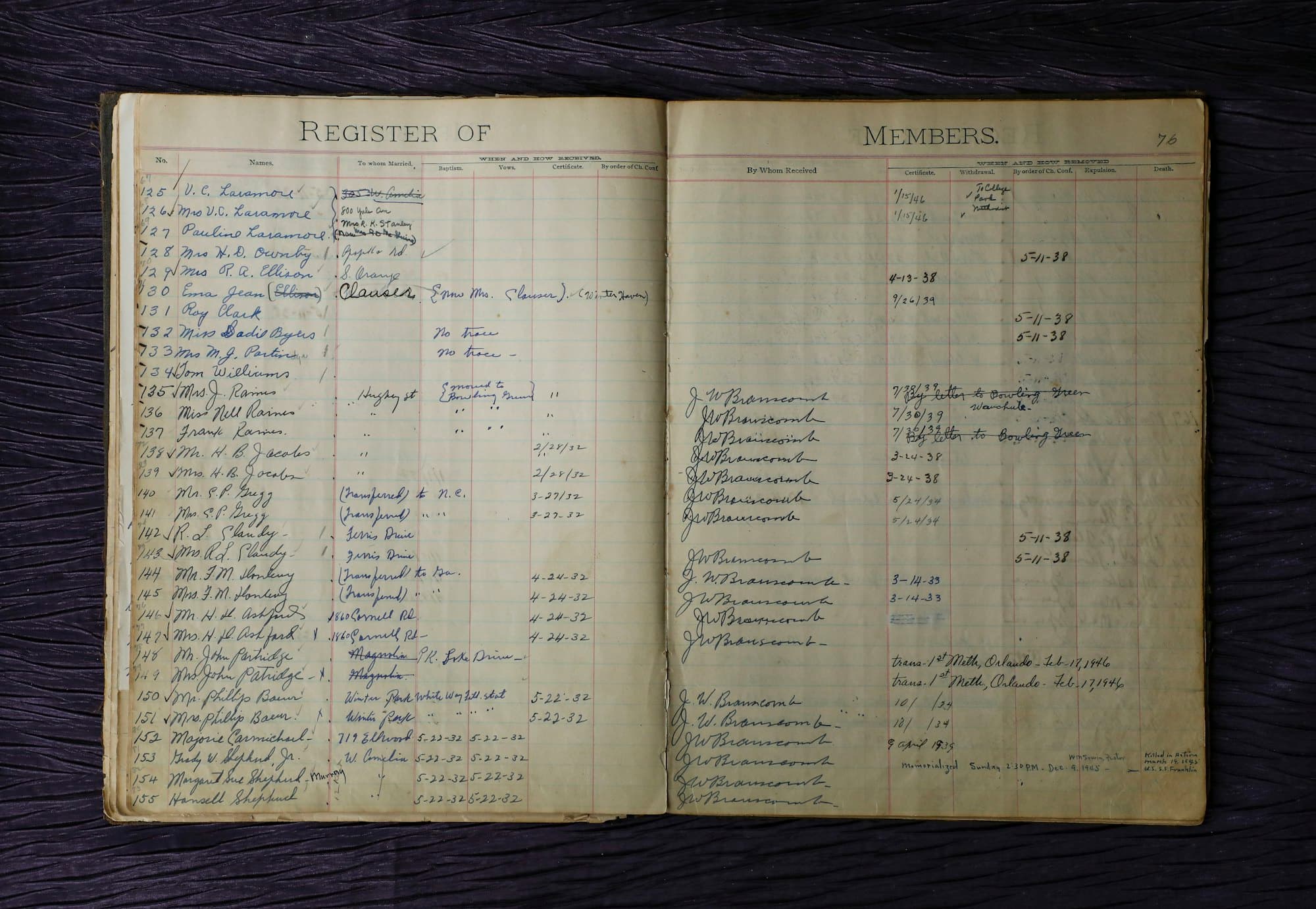
Before the software
Somebody has always kept this record by hand, in ink, and been answerable for it.
The obligation did not change when the register moved onto a screen. Only the person doing it now has forty other things to keep, and no ruled page to keep them on.
In the room
The company secretary is the one who has to answer for it afterwards.
Not the chair, and not the software. When the regulator asks whether the notice period was met, whether the interest was declared, or why a document is missing, one person is expected to produce the answer from the record.
Board.Africa is built for that person. Everything it refuses to do — silently overwrite a minute, dispose of a record under hold, leave a correction unattributed — it refuses because they would be the one explaining it.

Minute 7.3 · signed by the Chair
Quorum eight of eight. One interest declared and recused.
See the product
The screens your board will use, not a mock-up.
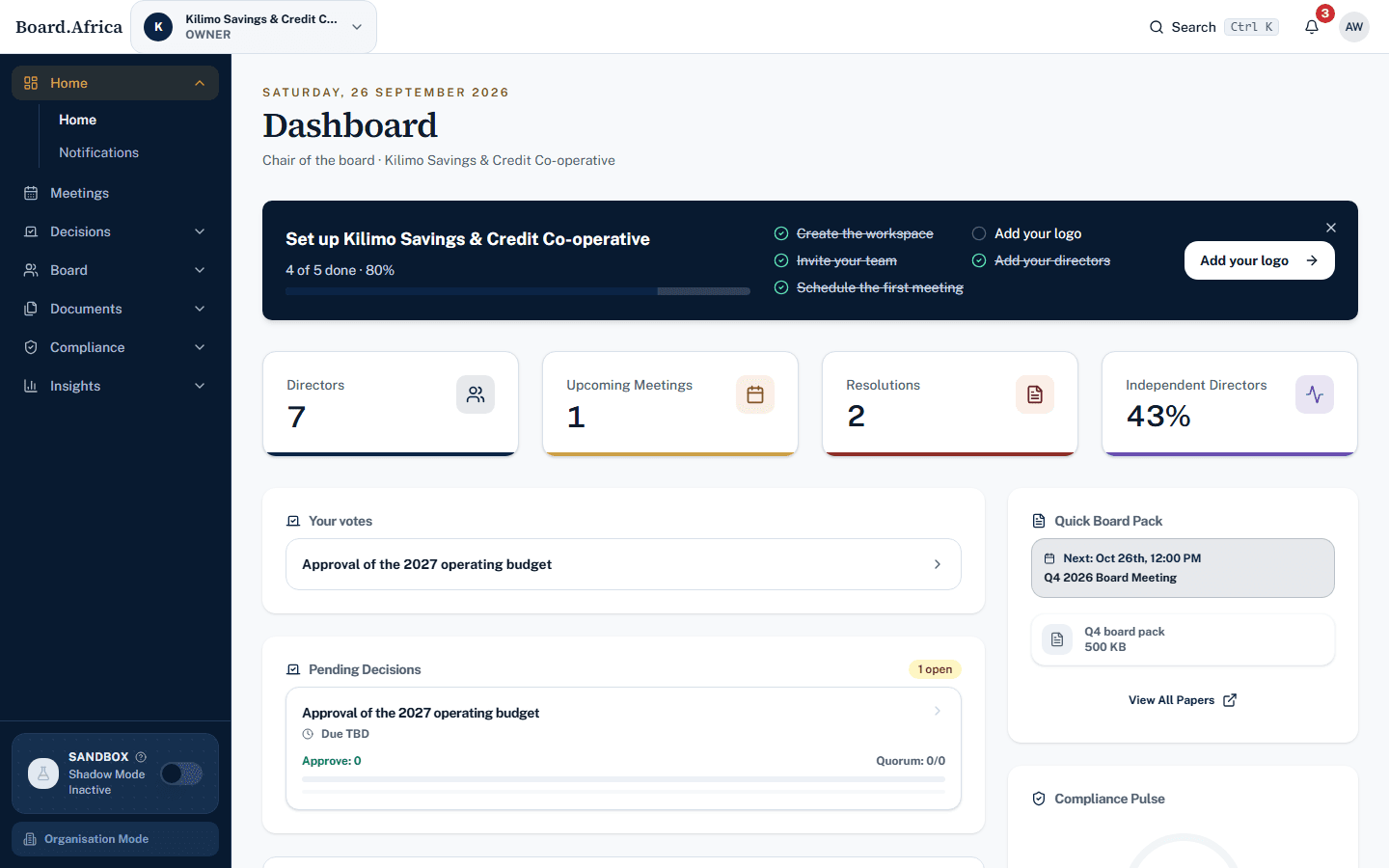
Six screens from Board.Africa running a fictional co-operative: its home, a meeting from notice to follow-up, papers with their history, the appointment form, the board’s composition and the user guide.
Undertakings
What we will be held to.
Not a scale claim. These are the specific behaviours a company secretary is answerable for, written as commitments you can put to us in procurement.
Put these to us- Access ends with the appointment
- When a directorship ends, so does access to the pack. Access to every paper is checked by the database for each person and role, so a former director can no longer open the strategy paper from a personal device.
- The record is not editable after the fact
- The audit trail is append-only and hash-chained per organisation. Nobody — including us, including the service role — can revise or delete an entry once written.
- Legal hold outranks the retention schedule
- A record under hold is refused disposal, and the hold is checked again at the moment of execution, not only when the disposal was proposed days earlier.
- One organisation cannot see another
- Separation is enforced in the database by row-level policy, on reads and on writes, rather than by a filter in application code that a future query might forget.
- Your data leaves when you do
- Full export of packs, minutes, resolutions and registers in open formats, on request, without a retention clause that makes leaving expensive.

#LeadRightSeries
Founders & CEOs Compliance and Tax Retreat
24–25 Apr 2026 · Lake Naivasha Panorama Park Hotel, Kenya
Two days on corporate compliance and taxation, for the people who sign the returns. Board.Africa runs the programme alongside the software, because the questions that come up in the room are the ones the product has to answer.